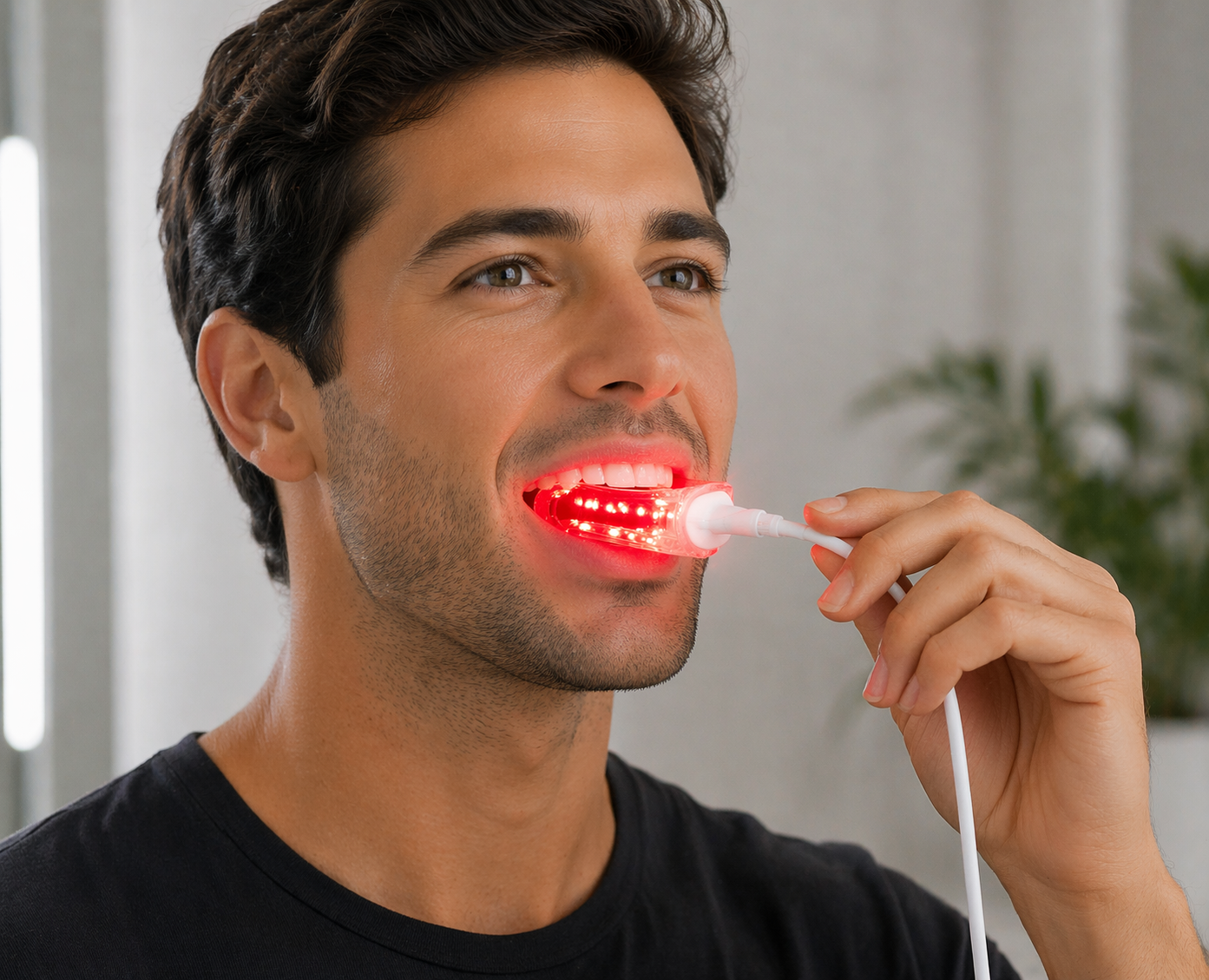
In Parts 1 and 2 of our Oral Health series, we explored the products and habits that support teeth and gum health, as well as the fascinating ways your oral microbiome affects your whole-body wellness. In Part 3, we’ll shine a light, literally, on red light therapy and how it can help prevent cavities, gum disease, and speed up recovery after dental procedures.
What Is Red Light Therapy and How Does It Work?
Red light therapy uses LEDs to deliver concentrated red and near-infrared (NIR) light deep into your cells. This stimulates the mitochondria, the tiny “powerhouses” in your cells, to produce more adenosine triphosphate (ATP), which fuels cellular repair and regeneration. Increased ATP also improves blood circulation, bringing more oxygen to your tissues and boosting the natural healing process.
When applied to the mouth, red light therapy can regenerate gum tissue, support bone health, and reduce harmful bacteria, all while decreasing inflammation and tooth sensitivity.
Benefits of Red Light Therapy for Oral Health:
Reduces tooth sensitivity
Heals gum inflammation
Improves blood circulation
Stimulates the growth of gum tissue and bone
Studies show red light stimulates odontoblast activity, increasing tooth matrix proteins and triggering tissue repair pathways. It can even protect enamel from damage caused by certain whitening treatments.
Blue LED light, while often used for whitening teeth, can selectively suppress bacteria linked to gum disease. Combining red and blue light therapies creates a powerful approach for preventing oral disease.
Red Light Therapy for Gum Disease
Gingivitis, characterized by bleeding and inflamed gums, affects up to 90% of people worldwide. If left untreated, it can progress to periodontitis.
A 2011 study found that red light therapy significantly improved the effectiveness of standard treatments for chronic gingivitis in children.
In 2018, a study of adults with chronic periodontitis showed that red light therapy reduced bacterial levels compared with a control group.
Combining red light therapy with standard procedures like scaling and root planing also enhanced treatment outcomes for severe periodontitis.
Red Light Therapy for Tooth, Gum, and Bone Regeneration
Red and near-infrared light can accelerate healing and even strengthen jawbones without surgery. By increasing ATP, osteoblasts (the cells that build bone) work more efficiently, producing collagen and minerals.
A 2019 study found that red light therapy significantly sped healing in patients after tooth extractions, helping both soft tissue and bone regenerate faster, an important step before dental implants or other restorative procedures.
Red Light Therapy After Dental Procedures
Pain and discomfort after fillings, root canals, or gum grafts can be frustrating. Research shows that red light therapy:
Reduces postoperative pain after root canals
Alleviates swelling (edema) after jaw surgery
Supports neurosensory recovery postoperatively
A 2021 review of 15 studies found consistent positive effects for pain, inflammation, and tissue recovery.
Red Light Therapy for Cancer Treatment Side Effects
Oral complications from cancer treatments like mucositis, dry mouth, and taste changes can reduce quality of life. Red and NIR light therapies have been shown to relieve these side effects, supporting better oral health and comfort for patients undergoing treatment.
Red Light Therapy for Tooth Sensitivity and Orthodontics
Tooth sensitivity affects roughly 40 million U.S. adults at some point. Red light therapy speeds dentin regeneration (dentinogenesis), reducing pain from acidic foods, whitening treatments, and other causes.
For those undergoing orthodontic treatment, red light therapy can also accelerate tooth movement, shortening treatment time while reducing risks like cavities or gum recession. A 2020 review of 11 studies confirmed this effect in most cases.
Safety and At-Home Use
Red light therapy is considered safe, with no major side effects reported. Temporary redness or mild eye discomfort may occur, but wearing protective goggles can prevent any irritation.
Until recently, high-quality red light therapy was only available in clinics. Today, premium devices designed for oral care are accessible for home use through specialized retailers and e-commerce platforms. Consistent use of quality devices is key to maximizing benefits.
Conclusion
Red light therapy is more than a wellness trend. It’s a practical, scientifically supported tool to protect your teeth, gums, and oral health. Whether reducing sensitivity, accelerating healing, or preventing gum disease, red and blue light therapies are valuable additions to your oral care routine. With accessible home devices, maintaining a healthy, radiant smile has never been easier.
References
Avila, M., Ojcius, D. M., & Yilmaz, Ö. (2015). The oral microbiota: Living with a permanent guest. Microbial Ecology in Health and Disease, 26(1), 27716. https://doi.org/10.3402/mehd.v26.27716
de Oliveira, R. G., et al. (2011). Clinical effects of low-level laser therapy in children with chronic gingivitis. Photomedicine and Laser Surgery, 29(5), 341–345.
Hamblin, M. R. (2017). Mechanisms and applications of the anti-inflammatory effects of photobiomodulation. AIMS Biophysics, 4(3), 337–361.
Martins, M., et al. (2018). Effects of low-level laser therapy on periodontal disease: A systematic review. Journal of Clinical Periodontology, 45(11), 1286–1296.
Xavier, S., et al. (2019). Effects of low-level laser therapy on healing of extraction sockets and bone regeneration. Photomedicine and Laser Surgery, 37(1), 14–20.
Mester, E., et al. (2006). Red and near-infrared light in dentistry: Mechanisms and applications. Journal of Clinical Laser Medicine & Surgery, 24(5), 255–261.
Forsyth Institute. (2020). Blue light therapy and oral bacteria. https://www.forsyth.org
Journal of Antimicrobial Agents and Chemotherapy. (2019). Effects of blue light on periodontitis-causing bacteria.